
Frida Kahlo Portrait Project for Kids

It's not possible to present an accurate picture of our culture without all the voices of the people in the culture. So at the emerging level, you can't have a good survey art show without women and artists of color.
-Frida Kahlo
grab the complete Frida Kahlo Inspired Pencil Portrait + Shadowbox project PDF + Printable pack here:

This is a fun and educational Frida Kahlo inspired art lesson plan for kids. This 12 page project PDF comes with a materials list, easy to follow step by step instructions, a lesson on value, project vocabulary, a review on light-tracing technique, extension activity, a printable sheet of flower shapes to inspire watercolor paintings and more. This project is fun for all ages but best suited for artists 6+
If you have younger kiddos, check out our Dancing Frida Doll Project.
Upon receipt of the email providing the download link, please make sure to save the PDF to your computer as the link expires in 24 hours.
We recommend printing templates on 65lb or thicker cardstock. Please check your printer specs before selecting your paperweight.
** Please note that this project + template pack is for personal/individual/non-commercial use
If you are interested in incorporating ART CAMP curriculum into your fee-based classes, art program or business please visit the Pro Page and join the ART CAMP Pro Community.
Take me to ART CAMP Pro sign up
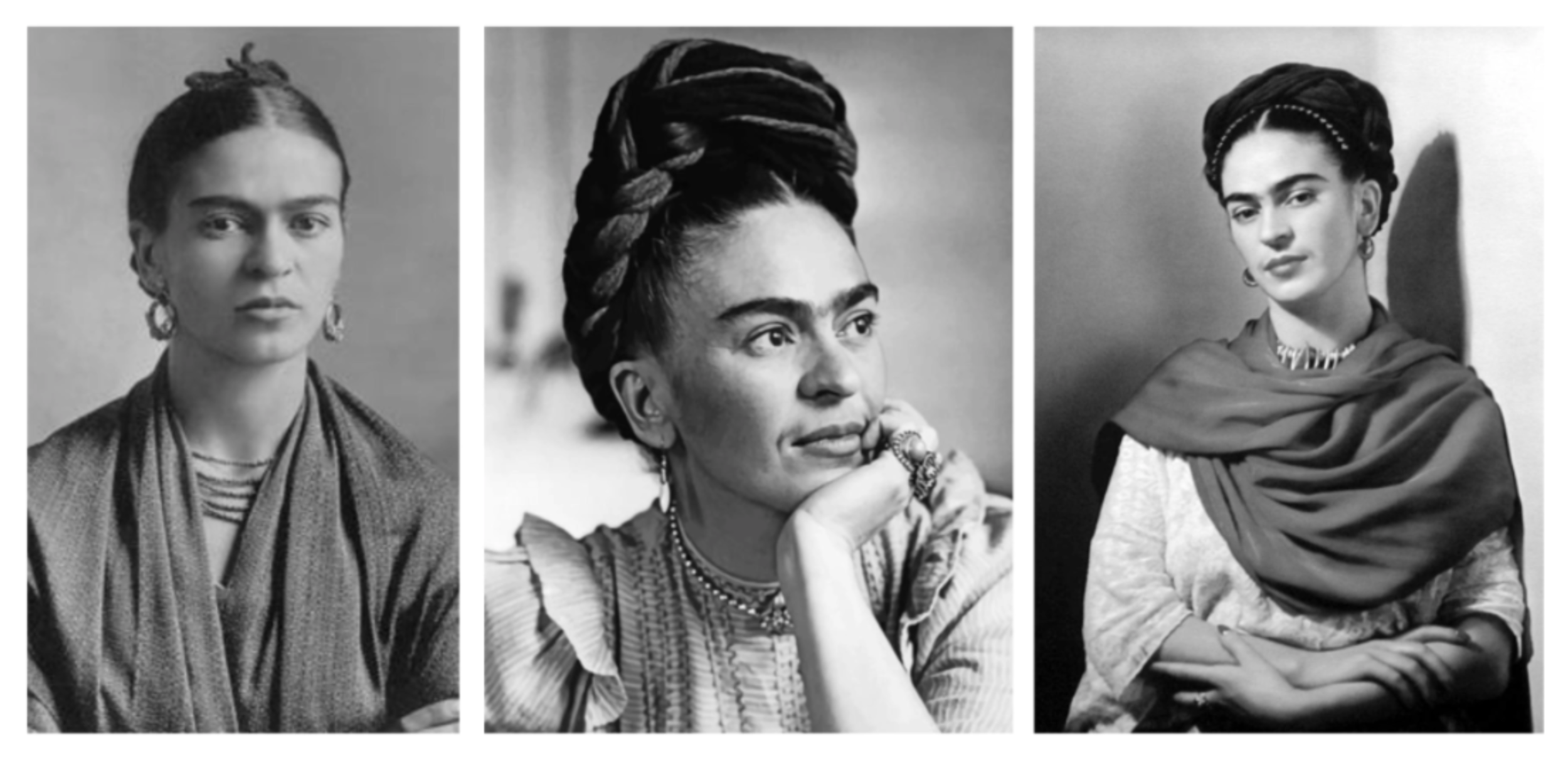
We do not own the rights to these images. Photographed by: Guillermo Kahlo, 1932; Bettmann/Getty Images; Photographed by: Nickolas Muray, 1939
Frida Kahlo was born July 6th, just south of Mexico City, in Coyoacán, Mexico. Even though Frida was born on July 6th, she insisted July 7th to be her birthday, to mirror the Mexican revolution. She grew up in a big blue house called La Casa Azul with her parents and 5 sisters. Frida was born three years before the beginning of the Mexican revolution. In her writing, Frida described being ushered into the house by her mother as gunfire rang through the streets of her hometown. As a young girl Frida preferred spending time drawing by herself versus playing with her sisters.
At age 6, Frida contracted polio, which damaged her right leg making it smaller than the left. Frida hid this deformity under long skirts.
When she was 18 she was in a terrible bus accident that broke her spinal cord, collarbone, ribs, pelvic bone, leg, foot, and shoulder. The injuries from this accident were so severe and pervasive that they impacted her for the rest of her life. Suffering, isolation, longing, and loss are recurring themes in her portraits, but they are accompanied by an unshakable strength. When you look at the intimacy and detail in these portraits you don’t feel pity, you are left in awe of the survivor. Frida created her own style of painting; blending the mystical qualities of surrealism with the rooted strength of Mexican folk art.
Despite being a prolific and talented artist, Frida spent most of her life known as “Diego Rivera’s wife.” It wasn’t really until the late 70s that Frida’s work was recognized by art historians and political activists. In the 90s Frida reached Icon status as an artist, feminist, and indigenous rights activist.
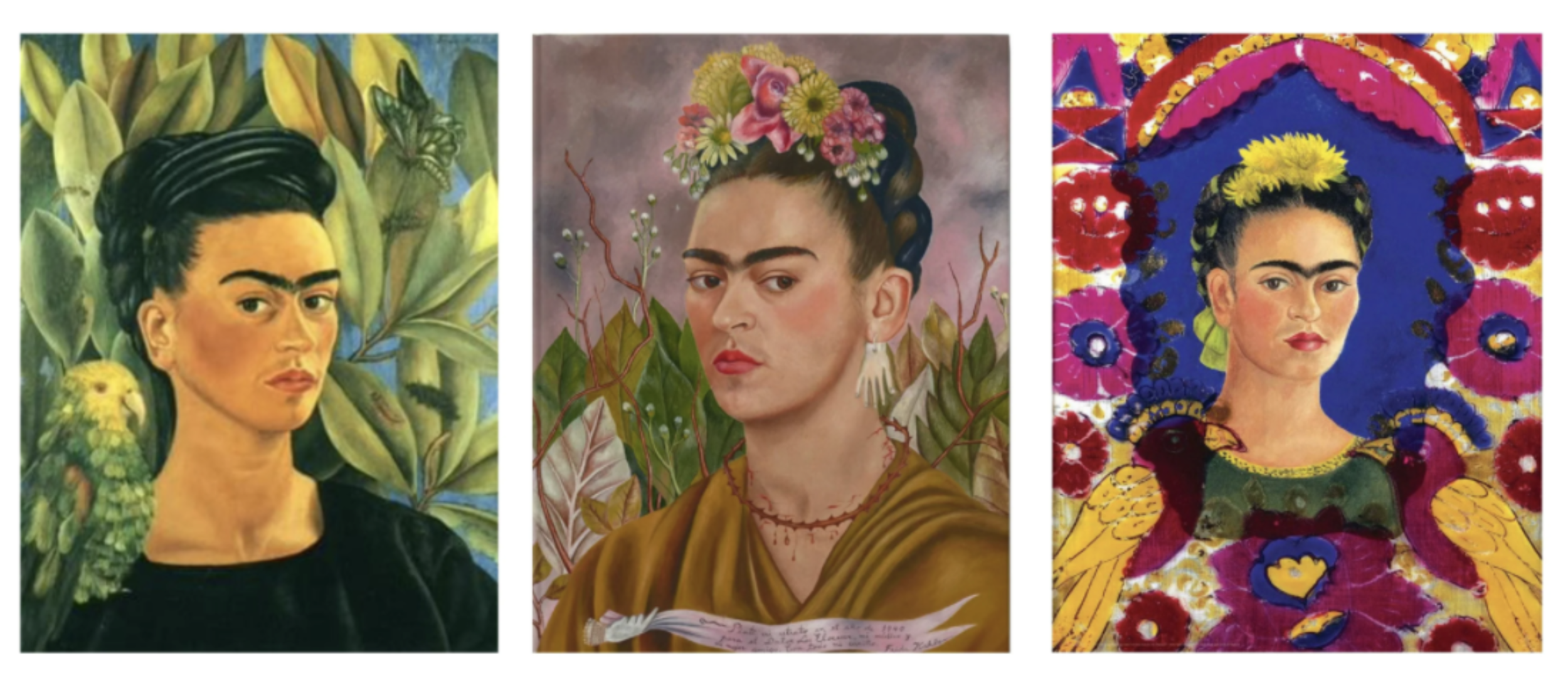
We do not own the rights to these images. Self portrait with bonito by Frida Kahlo, 1941; Self portrait by Frida Kahlo, 1940; The Frame (painting) by Frida Kahlo, 1939

